How Leunig’s Work Speaks to Australian Public Life
ByDieter Vogel
Start With the Public Mood, Not the Punchline
Australian public life happens at the kitchen table as much as it does in parliamentary chambers. Between 1969 and 2024, Michael Leunig built a body of work that treats suburban habits, religious doubt, and environmental concern as matters of profound civic importance. Readers encounter his cartoons and poems in moments of ordinary attention. A newspaper spread or a page in a Penguin Books Australia Ltd collection offers a quiet space to process arguments over belonging.
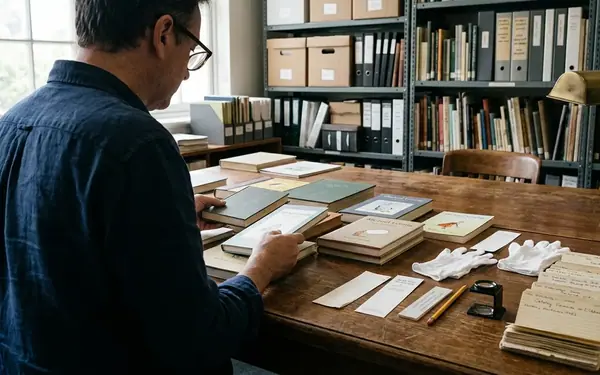
We approach this material at curlyflat as an independent archive-and-appreciation guide. The goal is to read these recurring public objects not as policy commentary, but as a mirror for the public mood. Formal politics relies on debate and legislation. The cartoon relies on recognition.
By capturing the private unease of the daily commute or the quiet anxiety of a changing climate, the work turns isolated feelings into shared cultural touchstones. It makes private vulnerability into a subject worthy of national reflection.
Why His Small Figures Carry Large Civic Questions
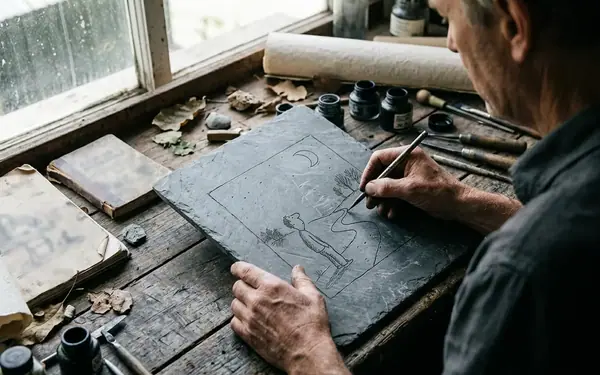
Consider the teapot resting on a sparse horizon, or a solitary walker accompanied only by a duck and a crescent moon. These fragile domestic interiors and handwritten captions dominated his newspaper publications from the 1970s through the 2010s. The apparent simplicity of these recurring marks operates as a deliberate civic method.
By stripping away the visual noise of modern debate, the author and illustrator reduces complex public issues to their core elements of conscience, tenderness, and moral discomfort. Because the typical reading situation is serial and compact—encountering one short captioned image at a time, this visual compression leaves room for layered interpretation.
Readers find space to disagree precisely because the emotional landscape remains so sparse. The emotionally exposed small figures do not lecture the audience. They invite the reader to project their own civic questions onto a quiet, uncluttered stage.
The Politics of Refusing Policy Language
How does a cartoon address war and peace without adopting the rigid vocabulary of a political platform? The answer lies in a deliberate refusal of official solutions. Across decades of published creative material, including interviews and collections like State of Bewilderment, the work consistently avoids party labels.
Instead, it clusters around themes of consumer conformity, loneliness, childhood, and public cruelty. This absence of policy detail is not mere vagueness. It functions as a cultural diagnosis, exposing spiritual emptiness and militarised thinking without presenting a manifesto.
By rejecting the language of officialdom, the work secures a different kind of political power. It roots its arguments in environmental care and family tenderness rather than legislative agendas. The refusal to speak like a politician allows the artist to speak directly to the citizen.
The Counterargument: Sentiment, Provocation, and Reader Fatigue
A public presence spanning more than fifty years inevitably generates friction. Some readers experience the work as overly sentimental, morally severe, or deliberately provocative. Fatigue with repeated innocence-versus-modernity contrasts became particularly visible during the online circulation shifts of the 2010s and early 2020s.
Yet dismissing these critics misses the point. Disagreement serves as evidence that the work occupies a genuinely public space rather than a purely decorative one. When assessing contested cartoons, the focus must remain on publication context, image construction, and caption wording rather than simple admiration or dismissal.
Sentiment is not automatically a weakness when it actively tests the emotional habits of a culture. A drawing that provokes anger or exhaustion is still participating in the national conversation.
Risk Factor: Treating one controversial image, detached from its caption, date, publication setting, and later circulation, as a complete account of Leunig's public meaning often leads to analytical failure.
A Better Way to Read Leunig in Public
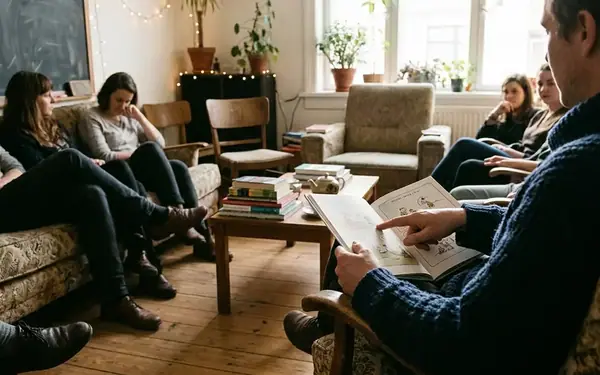
A classroom discussion of a 1990s cartoon about suburban isolation requires a structured approach. Educators and researchers benefit from a four-part close-reading sequence: identify the public issue, locate the private emotion, examine the visual compression, and articulate the unresolved question.
Pairing one cartoon with an adjacent form—such as a poem or a book passage, prevents the assumption that a single image represents the artist's complete worldview. This comparative method grounds the analysis in published evidence.
It shifts the focus from the creator's unverifiable intention to the mechanics of the artwork itself. By looking at how the image is built, readers can better understand how it functions in the world.
Recommendation: When using these works in discussion, ask what the cartoon makes difficult to ignore before asking whether the group agrees with it.
Scope and Limits of This Argument
What are the boundaries of reading a cartoonist as a primary civic interpreter? This editorial interpretation covers a long public presence across cartoons, poems, interviews, and books from 1969 to 2024. It is not an authorised biography, a comprehensive catalogue, or a final adjudication of every disputed publication.
Reception changes significantly across print-dominant decades and the online era. This interpretive frame is weakest when a single cartoon is being used to decide a concrete ethical dispute; in that case, the exact image, publication date, editorial setting, and affected readers' responses need to lead the reading.
The meaning of a drawing shifts as it moves through time and media. Acknowledging these boundaries ensures that our archival work remains rigorous and contextually grounded.
Critical Insight: A cartoon read as gentle moral reflection in a newspaper column may function entirely differently in an archive page, memorial essay, or online argument.