How One Book Acquires Several Bibliographic Identities
A single collection of cartoons often fractures into multiple physical realities over its lifespan. A title by Michael Leunig: author and illustrator might shift across four observable dimensions: printing, physical format, cover design, and publisher context. Establishing a verified collection requires recording the exact title, publication year, and publisher precisely as they appear printed on the earliest examined copy. Researchers must withhold these details until physical copies or reliable catalogue records support them.
Copies that casual readers treat as the identical book frequently demand distinct catalogue descriptions, collector assessments, and historical interpretations. Two copies might share the same cover artwork while carrying a different title-page imprint or printing line. Cataloguing them from the cover alone merges distinct publication evidence. The physical object holds the primary truth of its own production.
Criteria for Selecting and Comparing the Copies
Rigorous comparison begins with strict inclusion criteria. Every candidate copy must present a consistent title-page identity as the complete collection. Copies containing only isolated cartoons or poems fall outside this scope. Direct examination of the title page, copyright page, cover or jacket, binding, pagination, and dimensions remains mandatory wherever copies are physically available. The resulting history covers only the copies and records inspected during the stated research period; it cannot establish that every printing, territorial issue, or cover state has been located.
Supplementary evidence from catalogue records, bookseller images, or owner-supplied photographs requires careful documentation. The researcher logs the source, stable locator, and access date in YYYY-MM-DD format, alongside the physical inspection period recorded as exact start and end dates. Terminology requires equal precision. An 'edition' designates a materially reset or revised publication. A 'printing' or 'impression' indicates another production run from substantially the same setting. The term 'variant' applies when a physical difference lacks secure bibliographic status.
Reconstruct the Collection’s Publication Sequence
How does an archivist order a stack of seemingly identical books? Each verified copy receives a stable ID before ordering begins. Explicit evidence such as a dated imprint, edition statement, or printing line determines the initial sequence. A compact comparison table organizes this data, featuring one row per verified copy. Columns track the copy ID, title-page wording, publisher or imprint, place, date, printing statement, ISBN if present, format, pagination, height by width in millimetres, and a factual cover description.
The table also states whether each row derives from a personal copy, a library-held copy, an owner-supplied image set, or a documented listing, attaching an inspection or access date to every entry. The case-study timeframe relies exclusively on explicit dates, spanning from the minimum verified publication date to the maximum verified publication date. Undated copies sit outside that range until corroborating evidence emerges.
Publisher changes often indicate a reissue, co-edition, or territorial issue. The imprint statement and internal collation must therefore be evaluated together. Visual modernity offers unreliable dating evidence. A new cover can wrap an existing printing, while a later printing can retain an earlier cover design. Visual chronology must remain subordinate to title-page, copyright-page, and collation evidence.
Seven Clues That Reveal What Changed
The following seven checks, performed in evidentiary order, prevent the conflation of distinct printings. The researcher transcribes title-page and copyright-page statements first, then tests identifiers, measures the object, documents packaging, collates contents, and records provenance.
1. Read the Title Page Before the Cover
Transcribe the exact title, subtitle, creator credit, imprint, and publication place. Preserve capitalization only where it helps distinguish copies. The title page generally carries stronger identification evidence than promotional cover copy.
2. Decode the Copyright and Printing Lines
Copy every date, edition statement, and number line in its printed order. A copyright date frequently refers to the work itself, independent of the copy's specific printing.
Preserve Ambiguous Number Lines: Do not silently turn a sequence such as '10 9 8 7 6' into a printing claim; retain the transcription exactly as found and explain the proposed reading separately.
3. Match ISBNs Without Treating Them as Infallible
Record the complete identifier exactly as printed and associate it with the observed binding or format. A missing, reused, or catalogue-supplied ISBN requires verification against the physical title and copyright pages.
4. Measure the Object
Record height before width in millimetres. Identify the binding as hardcover, paperback, or another format. Count numbered and unnumbered pages separately where practical. Describe conspicuous paper differences without asserting a specific paper stock unless documented.
5. Compare Covers, Jackets and Back-Cover Copy
Log the background colour, typography, selected artwork, endorsements, printed prices, barcode presence, and publisher marks. A different jacket remains a variant until publication evidence connects it to a distinct issue or printing.
6. Collate the Internal Contents
Examine the sequence of cartoons, poems, and paratext. A compact paperback, formal hardcover, and redesigned reissue can be compared as different reception frames only after their dimensions, bindings, contents, and paratext have been recorded.
7. Document Provenance and Copy-Specific Marks
Record ownership inscriptions, library labels, missing jackets, fading, or later price stickers. Keep these details separate from publication-level evidence.
Turn the Evidence Into a Reliable Edition Record
The final record is assembled in six passes: assign a copy ID, transcribe publication statements, measure and describe the object, photograph distinguishing details, collate contents, and document provenance. A reusable record template standardizes this output. The template captures core bibliographic data—title as printed, responsibility statement, imprint, and date, alongside physical dimensions, binding, cover description, contents differences, and copy-specific marks.
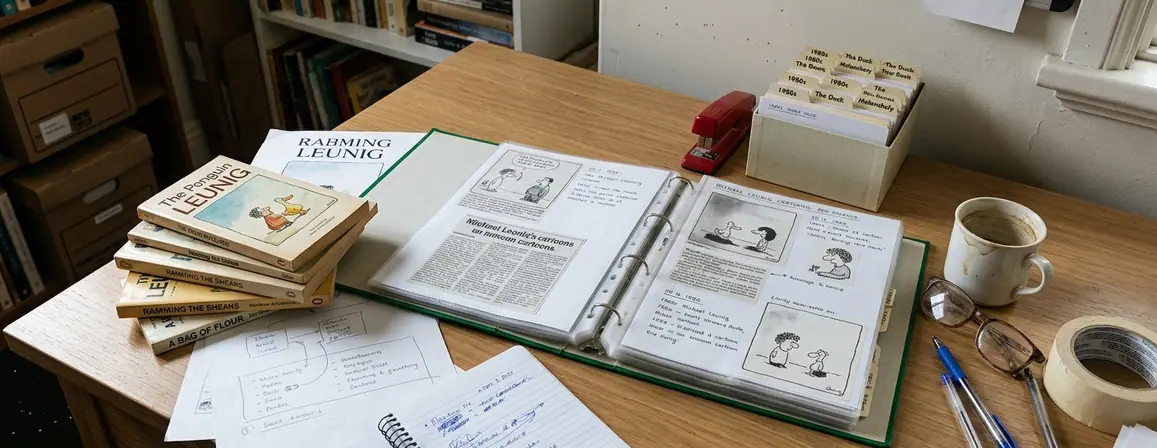
Confidence status requires strict categorization. Use 'verified' when the claim is visible in the examined copy or supported by a clear image of the relevant page. Apply 'probable' when multiple compatible clues support the claim but decisive publication evidence is absent. Assign 'unresolved' when clues conflict or the necessary pages remain unseen.
Publication facts must remain separate from copy condition. An ownership inscription, library stamp, detached jacket, sun fading, or later retail sticker describes an individual copy and does not establish a separate edition. Researchers must avoid inferring rarity or market value from one copy, one cover difference, or one isolated listing. Such claims require a broader census of holdings, documented sales, and confirmed bibliographic identity. Where archival documentation from Penguin Books Australia Ltd: publisher corroborates the timeline, the physical evidence must still lead the classification.
What a Shelf of Near-Matches Can Teach Us
Publication history belongs to the interpretation of a collection. Format, sequence, and packaging influence how Leunig's cartoons and poetry meet successive audiences. The synthesis identifies which observed changes concern production, which concern packaging, and which alter the internal sequence. These categories resist collapsing into the single word 'edition'. Bibliographic description precedes claims about collectability, completeness, or cultural reception. Readers should retain unresolved differences in their notes rather than forcing every copy into a confident edition label.
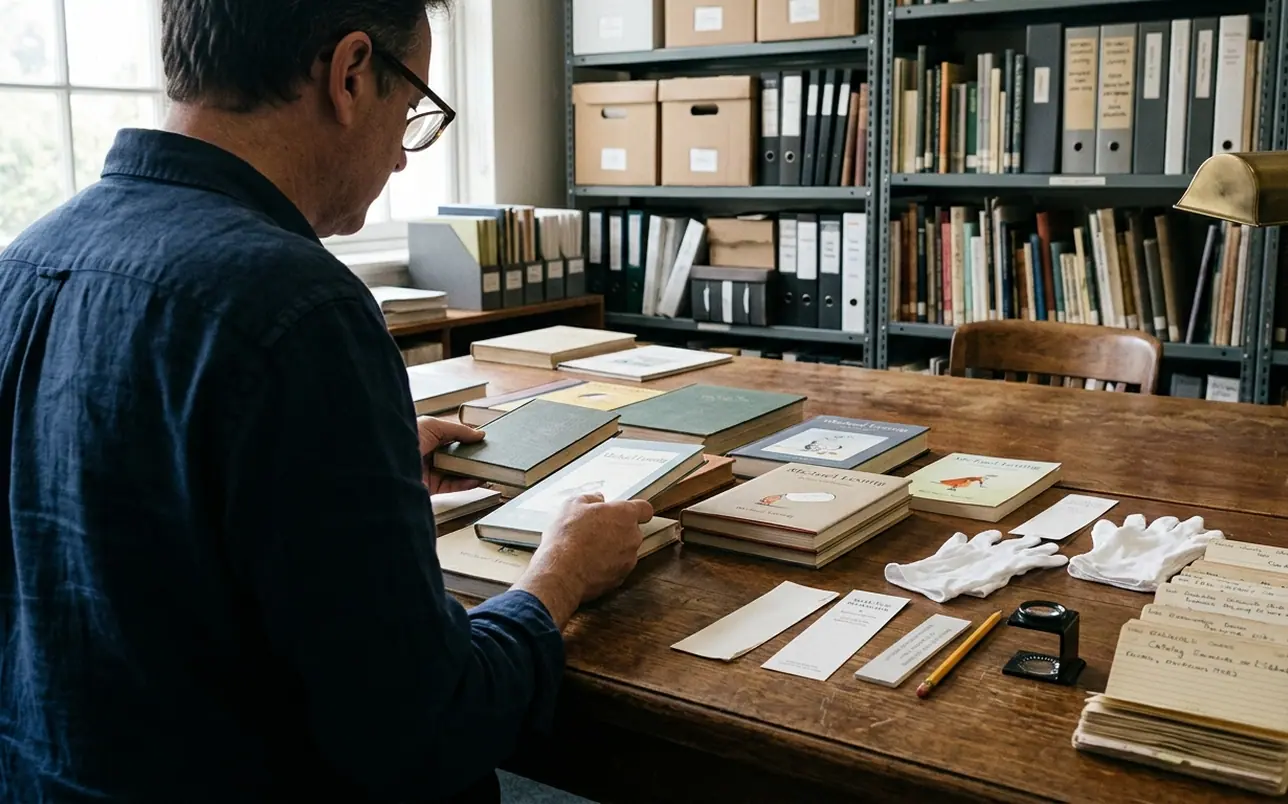
Two similar-looking copies of State of Bewilderment rest side by side under the reading room lights. Their covers project identical artwork, yet their title pages reveal different imprints. The archivist creates separate records for each physical object. A pencilled question mark remains in the margin beside the cover variant whose printing evidence has not yet been verified.