Why Newspaper Context Changes the Cartoon
A cartoon severed from its publication page loses its immediate vocabulary. Newspaper cartoons were never isolated artworks; they appeared beside editorials, letters, political reporting, advertisements, and the public arguments of the day. Encountering Michael Leunig’s work today as clipped images, book reprints, or online fragments flattens the original tone and intent. A failure case frequently emerges in retrospective collections: a cartoon reprinted with only image and caption can make a topical newspaper joke look like a timeless personal allegory if its neighboring editorials, letters, and issue date are missing.
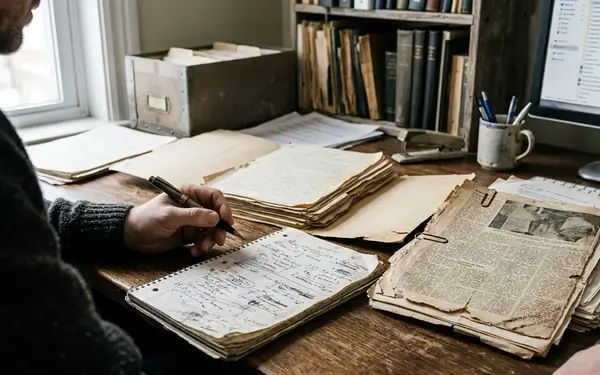
Ongoing archival research spanning the mid-1960s through late 2010s demands a context-first method. The minimum source record for each cartoon must include the newspaper title, issue date, page number, section label, cartoon caption, visible signature, and adjacent items. Archival comparison confirms that placing the first-run newspaper appearance beside any later book or exhibition reproduction reveals critical changes in sequence, cropping, and date information. You must identify the publication setting, audience expectation, and surrounding debate before making a strong interpretation.
Methodological Risk: Treating symbols from the 1970s, 1990s, and 2010s as automatically identical strips the artwork of its historical friction. Always tie a motif to a dated cartoon or dated newspaper appearance.
The Age and Nation Review as Editorial Homes
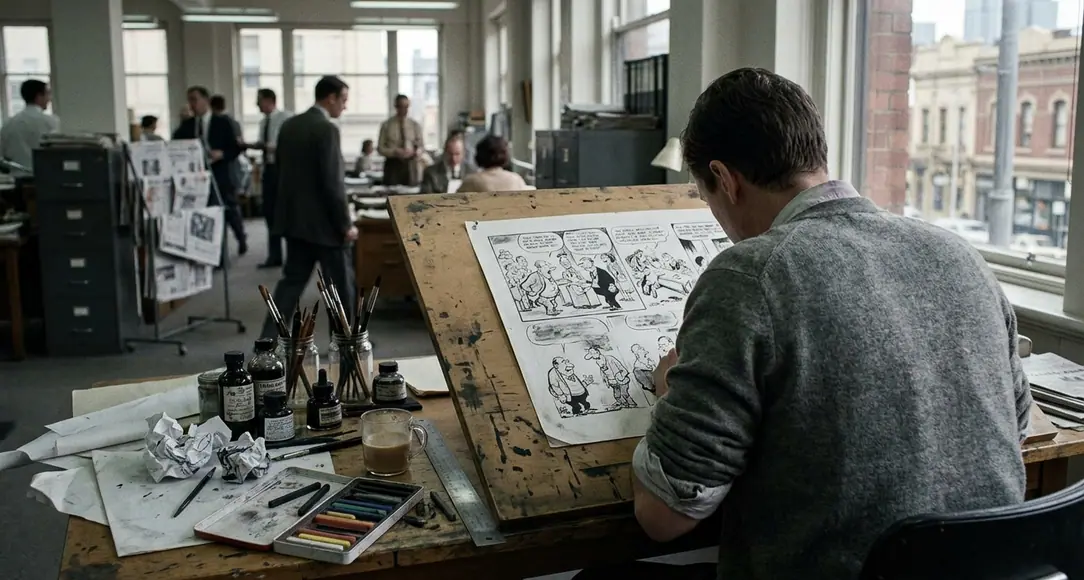
Consider the physical environment of the drawing before assigning tone. The Age operates as a major Melbourne daily masthead dating from 1854. For researchers, it functions as a metropolitan newspaper context rather than a neutral display space. A daily slot usually values recognisable public address and a repeat-reader rhythm. The cartoonist must speak to a broad civic readership, navigating the steady pulse of daily news cycles and established community standards.
Contrast this with Nation Review, catalogued by the National Library of Australia’s Trove catalogue with a 1970-1981 publication range. This bounded archive provides a sharper, alternative-press environment associated with political and cultural dissent. An alternative weekly can support denser satire, countercultural reference, and a more abrasive voice. The same illustrator may appear civic and lyrical in a daily paper, yet confrontational and eccentric in an alternative weekly.
Source records indicate that venue dictates the boundaries of the joke. A practical archive check involves searching catalogue title records first, then confirming whether the specific issue is digitised, microfilmed, held in print, or requires library access. The editorial room built around the work fundamentally alters how the ink is read.
Cartoon Culture as Public Argument, Not Decoration
How does a line drawing argue with a headline? Australian newspaper cartooning operates as a compressed public language. The reading process should first list observable evidence categories: caricature, caption, emblem, recurring character, posture, facial expression, domestic object, landscape, speech bubble, handwritten line, scale, blank space, and absurd juxtaposition. These elements do not merely decorate the page; they carry the argument.
Cartoon culture depends entirely on shared recognition. Context categories to check in surrounding material include politicians, church authority, suburban domesticity, bureaucracy, war anxiety, environmental concern, family ritual, workplace routine, and Australian everyday customs. The cartoon asks readers to complete the joke, recognise the target, or sit with discomfort rather than receive a fully explained thesis.
To capture this shared recognition, establish a strict issue-window for context checking. For a daily newspaper, inspect the same issue plus the previous and following 1-7 calendar days. For a weekly, inspect the same issue plus the previous and following 1-3 issues. This window captures the immediate cultural oxygen the cartoon was breathing upon publication.
Where Leunig Fits and Where He Resists the Slot
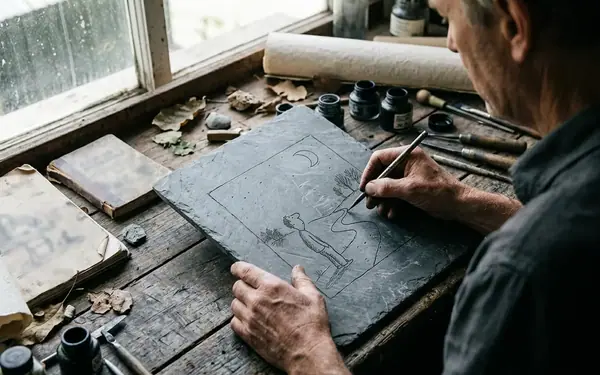
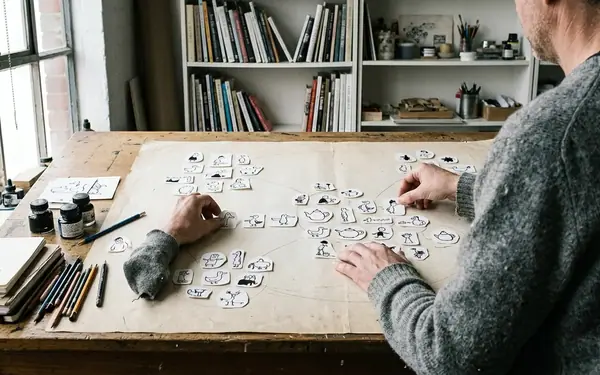
Michael Leunig occupies a distinct space within Australian cartoon culture, operating without being reduced to standard political caricature. Documenting his newspaper venues requires tracking a recurring graphic vocabulary. Visible features to record during close reading include fragile human figures, handwritten captions, ducks, teapots, moons, angels, children, lonely roads, domestic interiors, public absurdity, spiritual unease, and moral vulnerability.
Context-dependent variation dictates that a duck, teapot, moon, or childlike figure may signal tenderness in one cartoon, civic absurdity in another, and spiritual unease in a third; the symbol needs a dated page context before it is assigned a stable meaning. His work often moves fluidly between cartoon, poem, prayer, joke, social criticism, and private fable. This ambiguity makes the publication context especially critical.
A wide reader-response range must be allowed in your analysis. Affection, discomfort, disagreement, reverence, satire, and historical distance can all be legitimate responses when supported by the image and context. The artwork resists a single, flattened interpretation.
A Five-Step Method for Reading the Cartoons
I apply a repeatable sequence to anchor the artwork in its original moment. This method moves systematically from the physical page to the symbolic vocabulary, ensuring interpretation remains grounded in documented evidence.
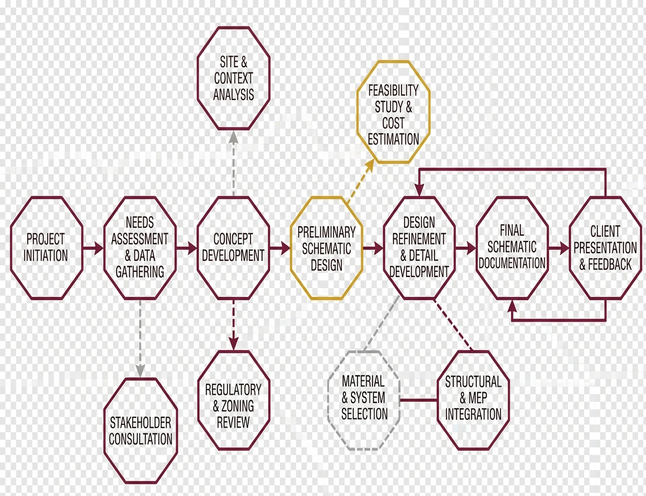
- Identify the publication setting: Record the exact source type before interpreting. Note whether the cartoon appeared in a daily newspaper, alternative weekly, book collection, exhibition label, online archive, or clipped reproduction.
- Reconstruct the immediate moment: Inspect editorials, letters, political reporting, cultural reviews, advertisements, and seasonal notices in the same issue. Extend the search to 1-7 calendar days for a daily or 1-3 issues for a weekly when the immediate reference is unclear.
- Separate visual evidence from interpretation: Build a visible-evidence log. List figures, posture, clothing, objects, caption text, spatial arrangement, line weight, tone, and any named or recognisable public target before deciding what the cartoon argues.
- Track recurring symbolic vocabulary: Record ducks, moons, teapots, angels, childlike figures, roads, houses, bureaucratic desks, and religious or domestic imagery only after noting their local use in the specific cartoon.
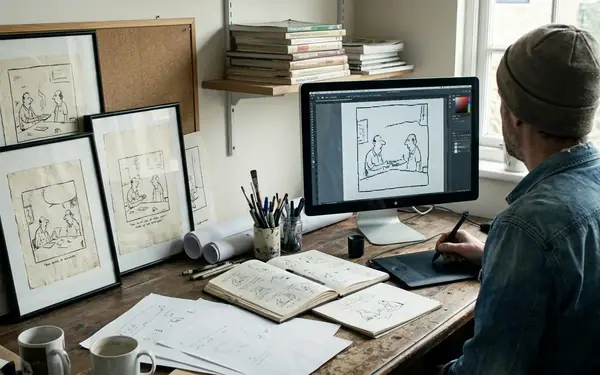
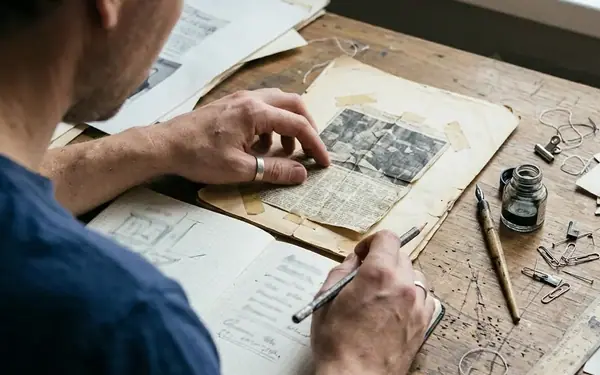
- Compare later republication: Compare the newspaper page against any book sequence or retrospective selection. Note caption edits, cropping, date labels, and surrounding images to describe how meaning changed after removal from the newspaper page.
Archival Strategy: When teaching or researching, write two notes for every cartoon: one describing visible evidence and one listing contextual questions still unresolved by the immediate page.
Case-Study Prompts for The Age and Nation Review
What happens when we test this method on the page? Rather than inventing unsupported case-study outcomes, researchers should use a reusable prompt set. The reader must test how venue, page setting, and visual evidence interact, writing findings as questions answered by the archive record.
For a cartoon from The Age, ask specific civic questions. Does the drawing address a broad metropolitan readership? Does it clarify a public issue, complicate it, or redirect it into moral reflection? For a cartoon from Nation Review, shift the inquiry. Does the work assume a politically alert, satirical, or countercultural reader? Is the joke sharper because of the weekly’s editorial tone?
For either venue, ask what evidence disappears when the cartoon is encountered only as a detached book image, online fragment, classroom handout, or exhibition reproduction. A robust teaching workflow pairs the cartoon with the same issue’s editorial page, letters page, and at least one item of political or cultural reporting from the issue before assigning an interpretive essay.
Scope, Limits, and Editorial Safeguards
This framework provides a disciplined way to move between image, page, archive, and later cultural memory. It serves as a reading framework for the newspaper context, not a complete publication checklist across every newspaper appearance, book collection, exhibition, interview, or later archive. E-E-A-T safeguards require labeling statements clearly as either visible evidence, documented publication context, plausible inference, or unresolved question.
Maintain a strict source hierarchy. Prioritise a named catalogue or library record first, the original issue or scan second, a later republication third, and an undated online fragment last. Keep exact issue dates, masthead names, page evidence, and reproduction history attached to any strong interpretive claim.
One catch remains regarding archival finality: surviving archives may confirm issue dates and page context, but they cannot reliably recover every editorial decision, production constraint, or individual reader response. We map the visible borders of the public conversation, acknowledging that the private reception of the artwork remains partially hidden.
Core Finding: The safest reading begins with the page, moves to the archive, and then returns to the drawing.