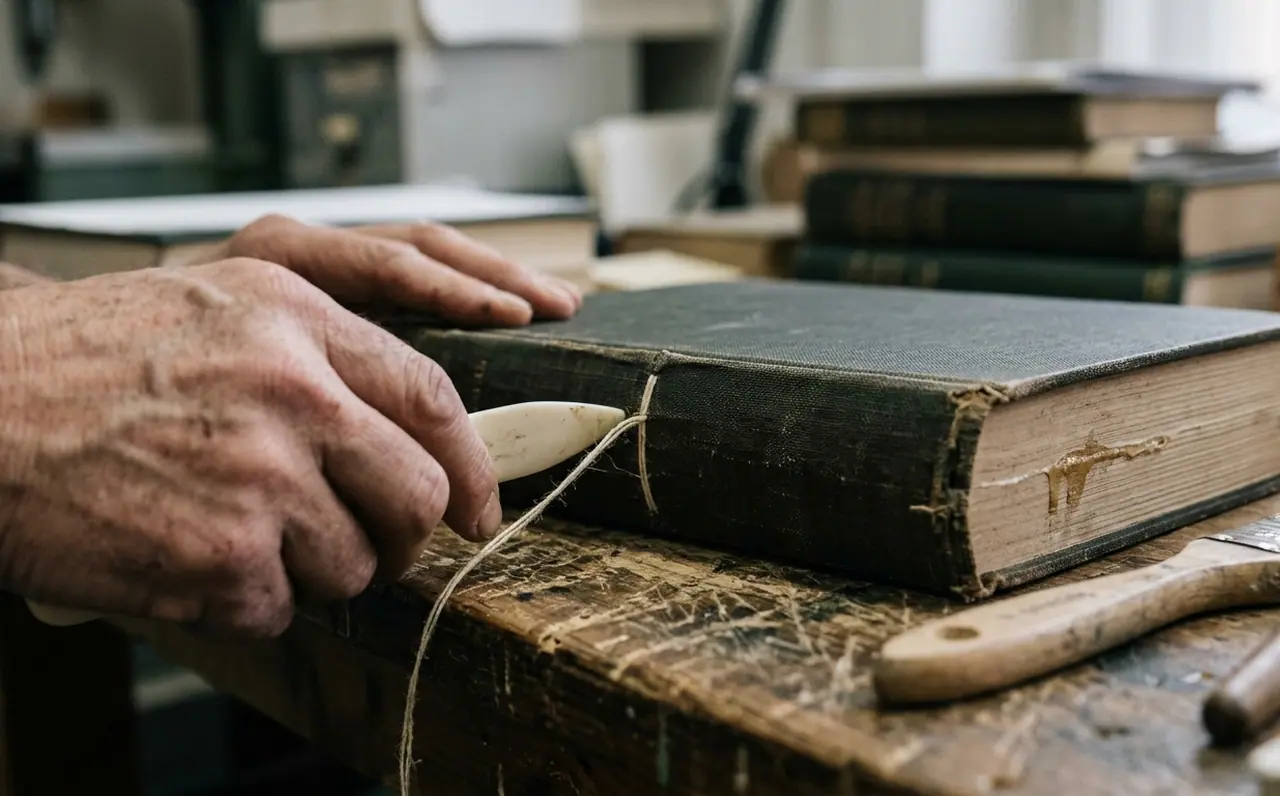
Why Leunig’s publishing formats matter
Most readers meet Michael Leunig one cartoon at a time. A poem clipped from a newspaper, a sketch photocopied for a classroom, a thin paperback passed around a kitchen table. Yet the work was never disembodied. It arrived in homes, schools, libraries, and second-hand shops through particular physical objects, and those objects shaped how the work was read.
This is a review of formats rather than a ranking of poems. I want to treat Leunig’s publishing history as a history of use: how cartoons and aphoristic verse reached people, how readers handled them, and how editions either preserved or dispersed that work over time.
Two broad carriers dominate that history. The Penguin-style paperback offered portable, affordable, democratic access. The hardbound collection offered durable, curated preservation. Each invited a different kind of reading, and each leaves different evidence behind for anyone trying to reconstruct the record. Leunig’s output travelled through newspaper publication, paperback compilation, collected editions, classroom photocopying, library cataloguing, and second-hand resale across roughly the late 1960s to the 2010s. Format is where that journey becomes visible.
Before interpretation, I record object-level facts: publisher imprint, the year printed on the copyright or title page, the binding, pagination, an ISBN if present, and any edition or reprint statement. The argument that follows rests on those features.
The paperback problem: access, wear, and everyday reading
Assess a paperback by the behaviour it invites. Compact illustrated collections were built to be carried, opened repeatedly, lent, and read in fragments. That makes the format unusually well suited to Leunig’s short-form work: single cartoons, brief poems, marginal sketches, the kind of page you browse rather than march through.
The Penguin-style Leunig paperback belongs most naturally to a particular moment. Through the 1970s, 1980s, and 1990s, the compact illustrated paperback was an ordinary household, school, and second-hand bookshop object. Penguin Books Australia Ltd, as publisher, helped move this kind of work into everyday reading life. A reader could keep one in a bag, return to a favourite page, and never treat the book as precious.
That intimacy is also the format’s weakness.
Paperbacks bend, tan in sunlight, shed loose gatherings, crease along the spine, and accumulate underlining and owner inscriptions. They get loaned and not returned. Worse for the bibliographer, they are easily separated from their original publication context, so a cartoon’s first newspaper appearance can vanish behind a later compilation page.
When I review a paperback copy, the checklist is concrete: spine condition, page tanning, loose or sprung gatherings, cover creasing, owner inscriptions, underlining, and whether the imprint page survives intact. A heavily marked copy presents a genuine tension. It reproduces badly, yet that same wear can make it valuable for studying reader reception, classroom use, or household circulation. The annotation is damage and evidence at once.
Recommendation:
If you are evaluating a paperback for study rather than display, do not discard the annotated copy. Photograph the inscriptions before anything else; they document how a particular reader actually used Leunig.
What hardbound editions changed
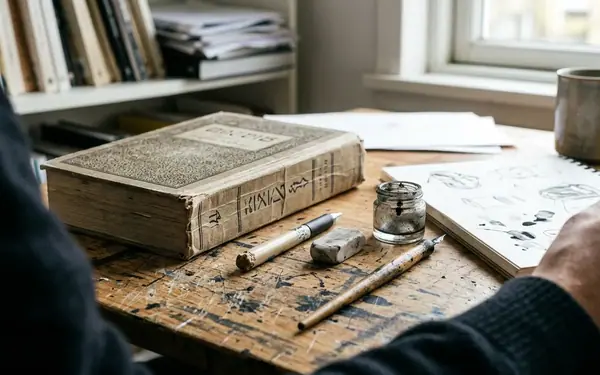
A hardbound collection is an act of consolidation. The editorial decision is not merely to reprint cartoons and poems, but to preserve them, sequence them, and present them as a durable body of work. The object announces a different status from the disposable paperback it often supersedes.
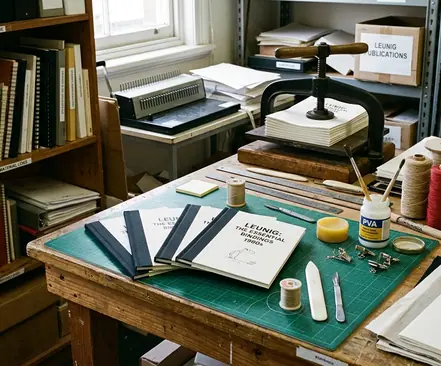
Material choices carry that message. Firm boards, heavier paper, stable binding, and stronger image contrast lend a perceived seriousness to drawings and verses that first circulated in far more ephemeral settings. A cartoon printed on newsprint and a cartoon set on heavy stock between hard covers are read differently, even when the image is identical.

Collected hardbound reading also reorganises attention. Work scattered across newspaper pages and paperbacks gets gathered into thematic clusters — faith, melancholy, domestic life, bureaucracy, animals, politics, childhood, and the textures of Australian public culture. Reading by theme rather than by date encourages comparison across pieces that originally appeared years apart.
That reframing is a genuine gain, but it deserves caution. It is a mistake to call a hardbound collection "definitive" without checking whether it omits, rearranges, retitles, or visually resizes earlier newspaper or paperback material. The consolidation that makes a collection readable can also quietly edit the record.
For condition, I check board firmness, hinge wear, the presence of a dust-jacket, endpaper condition, paper weight, image contrast, and whether the volume lies open without forcing the spine.
Penguin paperback versus hardbound collection: a reader’s review
Compare the formats by reader task, not by prestige. A casual reader, a teacher, a researcher, a librarian, and a gift-buyer each need different things: portability, durability, citation reliability, stable pagination, or clean visual reproduction. No single format satisfies all five.
The useful comparison points are practical:
- Handling and durability: paperbacks travel well but wear quickly; hardbounds resist repeated consultation.
- Page layout and image reproduction: heavier hardbound stock generally holds contrast and caption legibility better.
- Sequence and margin space: collected editions impose an order and often give images more room.
- Pagination stability and citation: stable pagination matters enormously when you need to quote one specific cartoon or poem.
The division falls out cleanly enough. Paperbacks suit mobile, excerpt-based use: intimate reading, classroom extracts, a travelling copy, encountering Leunig as the popular newspaper-era voice. Hardbound editions suit retention, repeated consultation, gifting, library shelving, and sustained thematic comparison across many pieces in a single sitting.
Critical Insight:
Choose the format by the task in front of you. The paperback is the better companion; the hardbound is the better witness.
The bibliographic friction behind Leunig collections
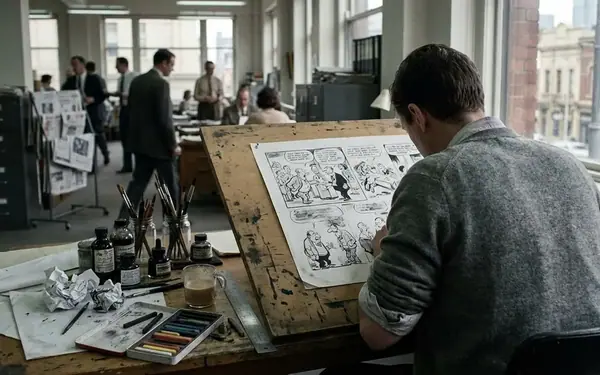
Why is Leunig’s publishing history so awkward to reconstruct? Because individual pieces move. A cartoon may begin on a newspaper page, reappear in a paperback compilation, then surface again in a later collected edition, with a library catalogue record describing only the last of those stages.
The method I follow is to build the chronology from visible edition evidence first, then cross-check. Inspect the book before interpreting it. At minimum I capture an exact title transcription, the author credit, the publisher name as printed, the place of publication, the publication year, any edition or reprint statement, an ISBN where present, pagination, physical size, and series information.
Public catalogue records help at this stage. The National Library of Australia catalogue records typically supply title, creator, publisher, date, physical description, subjects, and identifiers. Those fields verify edition metadata. They do not, on their own, explain cultural meaning.
One trap recurs. It is tempting to treat a catalogue year as the first publication date of every cartoon inside a collection. The collection date and a cartoon’s original appearance date can differ by years, sometimes decades. The catalogue describes the edition in hand, not the life of each image within it.
Scope and limitations of this publishing-history review
I should be plain about boundaries. This article does not attempt a complete bibliography of every Leunig edition, printing, reprint, or anthology appearance. The ruled-out alternative — a collector’s census of every printing and its price history, is a different project and a far larger one.
Instead the focus stays on the cultural and practical consequences of two carriers: the Penguin paperback format and the hardbound collection. The working evidence is edition-level material: imprint pages, copyright pages, bindings, pagination, ISBNs, catalogue records, and the observable condition of physical copies.
I have deliberately excluded claims I cannot ground. No invented print runs, sales totals, scarcity rankings, or resale values appear here, because none of those can be asserted without a named catalogue record, a publisher statement, or visible imprint evidence. A format review can explain how editions shape reading and preservation; it cannot, by itself, prove the first appearance date of an individual cartoon without newspaper or archive-level verification. That limit is worth stating outright rather than papering over.
How to choose the right Leunig edition for your purpose
Practical guidance belongs after the analysis, not before it. Choose by use-case, then verify the copy before you quote, teach, or compare from it.
- For personal reading, a sound paperback is enough. If the aim is intimacy and everyday access, prioritise a clean spine, an intact imprint page, and pages free of distracting damage.
- For teaching or research, prefer a copy with clear pagination, an intact title page, an intact copyright or imprint page, and catalogue-verifiable publication details. Stable pagination is what lets a second reader find the passage you cited.
- Before citation, photograph or transcribe the title page, the copyright page, any edition statement, the ISBN, the relevant page number, and any visible reprint line.
That last step takes minutes and prevents the most common error: citing a piece by a collection date that has nothing to do with when the work first appeared.
Risk Factor:
Quoting a Leunig cartoon from a hardbound collection while assuming its catalogue year is the cartoon’s origin date will misdate the work. Treat the collection date and the original appearance date as separate facts until evidence links them.
Final assessment: format is part of Leunig’s legacy
Format is not a footnote to Leunig’s work. It is part of how the work survived and how it came to be understood.
A defensible account distinguishes at least three stages: original or near-original circulation, paperback compilation, and later collected or hardbound preservation. Each stage left its own physical evidence — portability, wear, durability, binding, layout, sequence, reproduction quality, and citation stability.
The review judgement follows from that sequence. Penguin paperbacks carried Leunig into everyday Australian reading life, into bags and classrooms and second-hand shelves where the work was handled rather than guarded. Hardbound editions preserved and reframed that same work, gathering scattered pieces into durable, themed volumes that later readers and institutions could keep and consult.
Neither carrier is superior in the abstract. They answered different needs at different moments in the work’s reception. To read Leunig well is to notice the object in your hands, and to ask what that object made possible and what it quietly left behind.