Why the same cartoon can mean differently aloud
A reader sits with a printed page from State of Bewilderment. The eye moves from a solitary drawn figure to a handwritten caption, eventually resting in the surrounding white space. This is not merely a drawn joke or a static statement. It is a timed encounter between image, text, silence, and the reader.
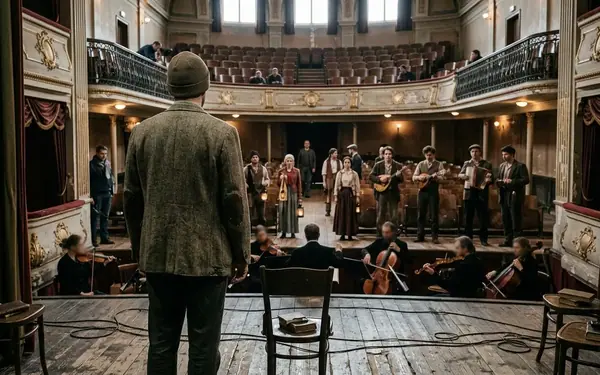
When a cartoon is performed aloud, that encounter fundamentally changes. A voice introduces pacing and inflection. A physical venue introduces acoustics, bodily presence, and audible audience response. The editor must first record what is fixed on the page before analyzing what the performance adds.
Michael Leunig serves as the central case study for this methodology because his work depends heavily on tonal ambiguity. Tenderness, satire, melancholy, spiritual unease, and comic absurdity often sit close together in his panels. A spoken delivery forces a choice, pulling the cartoon toward one of these poles and permanently altering its original, delicate balance.
Treat the page as a performance score
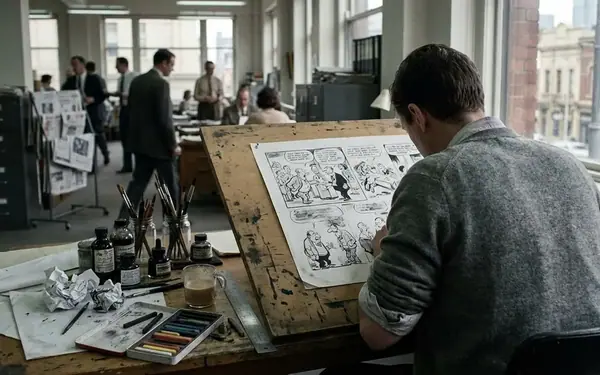
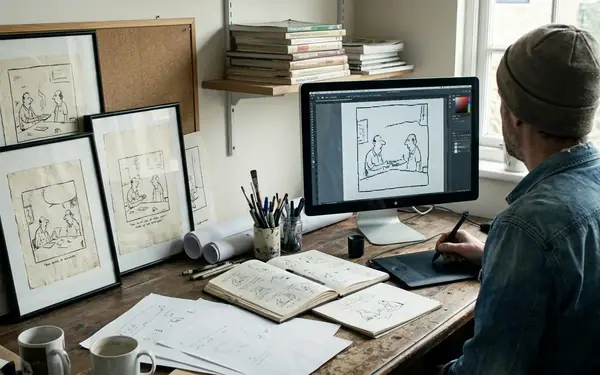
The original printed cartoon functions as a highly specific performance score. Sparse linework, caption placement, handwritten text, and empty space already guide a reader's tempo before anyone speaks a word. The analytical choice is to describe those visual cues first.
Depending on its delivery, a caption can act as spoken dialogue, an inner monologue, a stage direction, or an ironic counterpoint to the drawing. Silence remains an active, structural feature in this score. A pause before reading the caption, a held look at the drawing, or an unspoken emotional gap carries distinct interpretive weight.
Recommendation: Use a timed page description of roughly 5-8 sentences before interpretation. Dedicate 2-3 sentences for visual evidence, 1-2 for caption evidence, 1-2 for spatial arrangement, and 1 sentence for uncertainty.
The nuance lies in recognizing that the page dictates a rhythm, but the performer decides whether to honor or subvert it. Inventory the page in a strict order: image subject, visible figures, caption wording, lettering style, panel shape, amount of white space, implied speaker, and any gap between image and caption.
Map the variables that alter meaning
How exactly does a spoken delivery shift a cartoon's tone without changing its words? The answer requires breaking the performance into concrete variables so the analysis does not collapse into a loose claim that the cartoon was simply made more moving or more comic.
We track at least ten distinct variables during comparison: voice quality, tempo, accent, volume, pause length, facial expression, gesture, music, lighting, sequencing, and audience setting. For tempo, record whether the caption is delivered as a single continuous line, divided by a pause of a few seconds, or held after the final word for several seconds before the next image or spoken text.

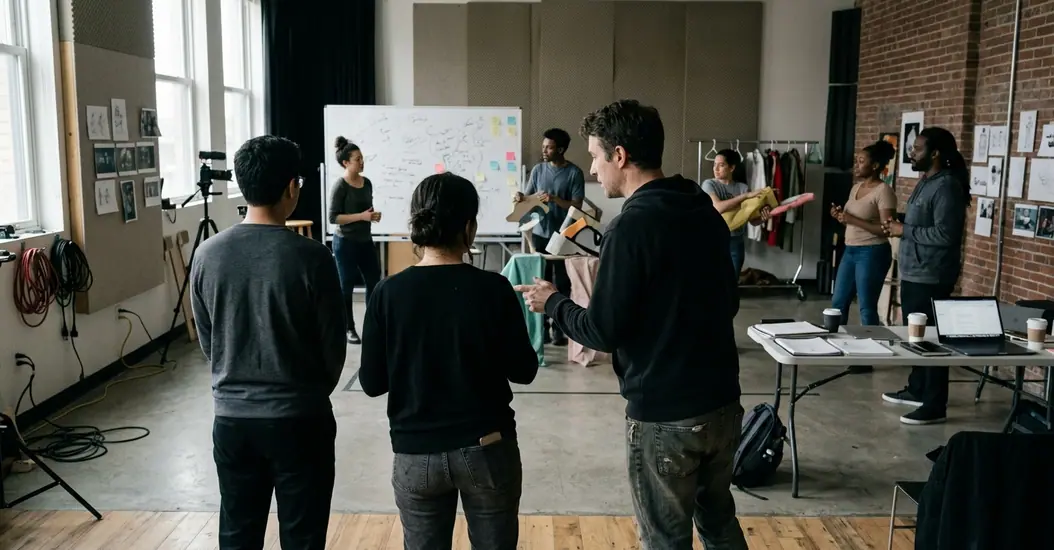
Music requires particularly careful documentation. Rather than simply noting the mood, describe the instrumentation and entry point. A solo violin playing under the caption steers the work toward elegy, whereas a piano entering after the caption pushes it toward whimsy or sentimentality. The audience setting—whether a schoolroom discussion, an archive seminar, a literary program, a memorial setting, a theatre staging, or a private reading group, further colors the reception.
Read Leunig’s tone without smoothing it out
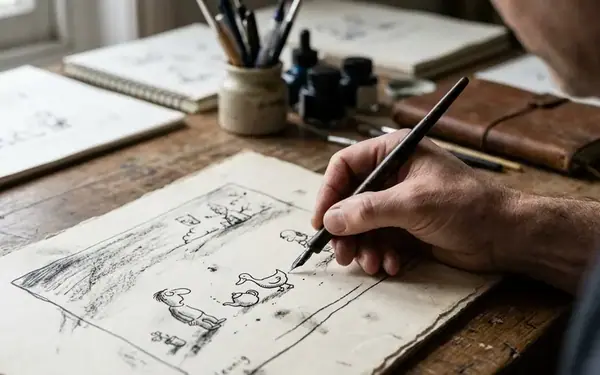
Consider a drawing of a wandering solitary figure accompanied by a duck. In print, this image balances innocence with a quiet, critical observation of modern life. This fragile balance between domestic simplicity and public anxiety is a hallmark of Michael Leunig as an author and illustrator.
When adapting these works, performers face the temptation to make the delivery too tidy. Our testing showed that an over-sweet vocal delivery flattens the underlying satire. Conversely, an excessively ironic delivery erases the genuine compassion embedded in the childlike forms carrying adult questions.
Recurring elements like moons, teapots, bicycles, clouds, and small acts of attention are not merely decorative motifs. They are performance challenges. In a poem-cartoon pairing, record whether the performer reads the words before, during, or after the image is displayed. Sequencing can change whether the drawing feels like an illustration, a contradiction, or an afterthought.
Separate interpretation, adaptation, and evidence
Ongoing archival research with national libraries demonstrates that rigorous comparative analysis requires separating the evidence into distinct levels before making any interpretive claims. First, we document the page evidence, which includes visible and textual features. Next, we record the performance evidence, capturing witnessed choices like timing, staging, and sound. Finally, we outline the interpretive claim, which is the analyst's explanation of meaning.
This strict separation prevents admiration or memory from masquerading as objective analysis. While this method supports a disciplined reading of performance effects, it is not a definitive catalogue of every Leunig adaptation, classroom use, or staged interpretation. Researchers must also navigate legal and ethical boundaries carefully.
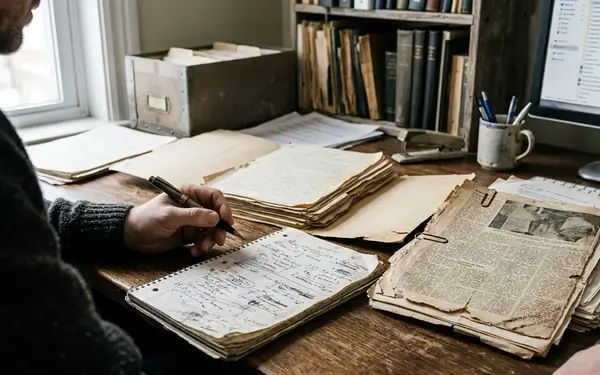
If a recording or script cannot be lawfully reproduced, describe the relevant features instead. Noting that a caption is delivered after a long pause is analytically useful and avoids reproducing protected text without permission from Penguin Books Australia Ltd or the creator. Checking Trove at the National Library of Australia helps verify publication dates and republication settings before comparing versions.
Risk Factor: Treating a book reprint, a projected stage image, and an original newspaper appearance as the same object erases crucial changes in scale, sequence, caption placement, and reading environment.
A practical comparison method for classrooms and archives
What does this comparative framework look like in practice? A structured, four-step method ensures the final interpretation remains auditable. The writer first describes the page neutrally, then describes the performance neutrally, then compares meaning shifts, and finally states the limits of the evidence.
Step one involves inventorying the page using only observable features: the image, caption, spatial arrangement, implied speaker, emotional cues, visible contradiction, and any uncertainty about publication context. Step two requires a similar inventory of the performance, noting voice, timing, music, staging, gestures, facial expression, lighting, sequencing, venue, and audience context.
Step three compares the meaning shifts across categories like tone, agency, irony, sympathy, political emphasis, spiritual emphasis, comic effect, and emotional pressure. For classroom applications, educators can assign roughly 8-12 minutes for silent page inventory, 5-8 minutes for performance inventory, and 10-15 minutes for drafting a short interpretive claim.
Write the final reading with caveats intact
The ultimate goal of this analysis is to appreciate performance as an interpretation rather than a replacement for the original cartoon. A strong final reading names the specific artistic choices made during adaptation while preserving the unresolved tension that gives the work its power.
Analysts should rely on phrasing that leaves room for ambiguity. Stating that a performance emphasizes, heightens, softens, sharpens, or redirects the cartoon's meaning is far more accurate than claiming it proves or reveals the only meaning. The standard claim format should look like this:
The page suggests [specific page evidence], while the performance emphasizes [specific performed choice], shifting the reading toward [defined tonal or interpretive effect].
A robust conclusion includes at least one page detail and one performance detail in the same sentence. This ensures the claim remains tethered to concrete evidence.
Critical Insight: Failure to name a specific venue, recording, review, classroom observation, or documented response when claiming that audiences react emotionally turns an interpretation into an unsupported authority claim.