Musical accompaniment can steer a listener toward reassurance, sorrow, or resolution before spoken words have left room for another reading. When an instrumental progression continues beneath a voice and reaches a settled chord before the spoken thought has fully ended, the music forecloses the interpretive openness of the text. In settings of works by author and illustrator Michael Leunig, where a simple domestic observation often hangs suspended between playful warmth and a wider State of Bewilderment, premature harmonic closure alters how the language functions. Restraint in musical settings—specifically through measured pauses and unaccompanied language—preserves this interpretive space.
What Accompaniment Can Settle Before the Listener Does
Evaluating the interaction between text and music requires tracking three distinct acoustic events: the last stressed word, the physical end of the voice, and the arrival of the accompaniment's closing chord. The temporal order of these three moments makes the interpretive framing concrete without claiming a measured audience effect. If a resolving chord arrives concurrently with the last stressed word, the harmonic environment tells the listener how to receive the phrase while the syllable is still sounding. If the chord arrives only after the voice has completely decayed, the text briefly stands on its own syntactic footing before the music comments upon it.
This sequence highlights a structural divergence between print and performance. On the page, a reader controls the temporal pacing. One can stop at a line break, return to an earlier phrase to test an alternative emphasis, or continue immediately into the next stanza. In a live or recorded setting, the duration between phrases is initially determined by the performers. The listener receives the poem inside a fixed temporal frame.
When accompaniment fills the intervals between phrases, it supplies continuous emotional direction. Leaving segments of language unaccompanied, or allowing a pause to remain unharmonized, restores a portion of the printed page's ambiguity to the temporal medium of performance.
When a Line Break Becomes a Breath—or a Cadence
How does an open graphic transition on a printed page become a closed rhetorical statement in the ear? In print, a line break permits several concurrent readings, acting as a visual hinge where syntax might either pause or spill forward. A performed pause, however, assigns that break a fixed duration and weight.
To analyze what happens inside that interval, we must separate the vocal and instrumental decisions before interpreting their combined effect. Three distinct mechanisms often occupy the same physical gap in time without being functionally interchangeable:
- The singer’s or speaker’s breath: A physiological necessity that prepares and supports the next vocal phrase.
- The rhetorical pause: A deliberate suspension of delivery that gives a preceding word or upcoming thought specific emphasis.
- The instrumental gap: A structural clearing in the vocal line that transfers the listener's primary attention to the accompaniment.
When an instrumental gap coincides with a rhetorical pause, the harmonic material inside that space dictates how the silence behaves. In musical grammar, a cadence is a gesture of arrival. A chord change, a descending bass movement, or a melodic settling during a vocal break can make a spoken phrase sound complete and answered, even when its actual wording remains questioning or provisional.
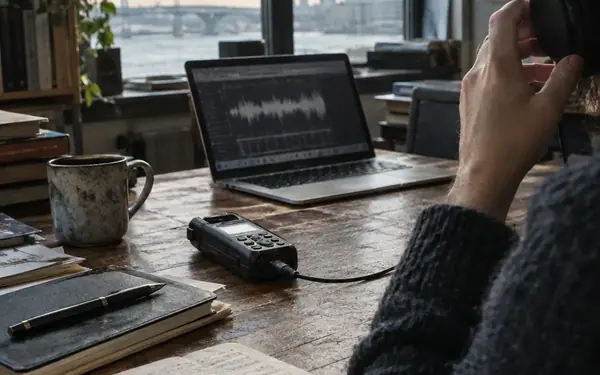
Suppose we retain the exact same 2–3-second vocal gap between two lines while changing whether accompaniment sounds beneath it—using that interval strictly as a working duration for comparison rather than a claim about an ideal pause. If the voice pauses after an appeal, yet sustained harmony continues moving toward resolution beneath it, vocal absence has not created an interpretively empty space. To document these mechanics objectively during rehearsal, I record observations in strictly audible terms: which specific word receives stress, whether harmony continues after the voice stops, whether words are repeated, and whether the final chord precedes or follows the last syllable.
One Passage, Three Ways to Frame Its Meaning

A hypothetical rehearsal comparison illustrates how temporal and harmonic framing alters a text while keeping the wording constant. Consider the opening invocation beginning "God help us to live slowly" from Leunig's The Prayer Tree, first published in 1991. Where archival catalogues from publisher Penguin Books Australia Ltd trace the circulation of his collected prayer-poems, this brief appeal stands out for its quiet directness. Because no edition-specific page number is supplied here, performers and readers should identify the passage by its opening words and check the exact wording and lineation against a legally obtained copy before rehearsal or publication. This comparison is an interpretive proposal for one passage, not a report of recorded trials, a description of an existing adaptation, evidence of Leunig's intentions, or a verdict on every musical setting.
Version One: Continuous Accompaniment
In the first rehearsal configuration, instruments accompany the entire spoken passage and continue sounding through the 2–3-second vocal gap following "slowly." Here, the analytical focus falls on whether the underlying harmonic movement determines the emotional turn before the syntax concludes. When warm, consonant harmony supports the opening words, the invocation risks losing its searching, unsettled urgency; the final chord supplies a feeling of completion that settles the plea into comfort.
Version Two: Unaccompanied Speech with Instrumental Response

In the second configuration, the performer speaks the passage entirely without accompaniment, followed immediately by a 2–4-second instrumental response. Because the voice operates alone, the words establish their own pacing and syntactic direction first. Yet the subsequent instrumental entry acts retrospectively. Depending on its harmonic color, that brief musical response can still cast the preceding spoken appeal as consoling, mournful, or neatly resolved.
Version Three: Unaccompanied Delivery with Complete Silence
In the third configuration, the performer delivers the passage without instruments and leaves 2–3 seconds of complete silence afterward. With no harmonic buffer, the analytical ear tracks how vocal mechanics alone shape the meaning. Placing primary vocal stress on "help" frames the line as an urgent petition, whereas stressing "slowly" turns the phrase toward self-reflection. Even without instruments, we must listen for where uncertainty remains and whether a falling vocal inflection itself supplies a definitive ending.
Across all three versions, the comparison returns to the same three diagnostic questions: who or what determines the emotional turn, where does uncertainty remain audible, and what specific element makes the ending feel complete?
When Restraint Turns into Solemnity
Removing instruments from a setting can easily replace musical sentiment with imposed solemnity. Sparse accompaniment and prolonged pauses are capable of enforcing a heavy, reverent mood just as forcefully as a lush harmonic arrangement enforces warmth. Restraint is a specific compositional choice about where music intervenes, rather than a competition to use fewer notes or longer gaps.
Acoustic austerity carries its own vocal traps. A hushed attack, softened consonants, and a falling vocal inflection can make unaccompanied language sound intensely devotional before any silence even begins. Returning to the invocation from The Prayer Tree, compare ordinary, conversational speaking emphasis with an elongated, breathy delivery of the word "slowly." While an ordinary delivery lets the plainness of the request stand clear, an overly elongated delivery often turns a direct human appeal into a prescribed liturgy. Even when removing the chord beneath "slowly" strips away harmonic steering, it does not remove the performer's interpretation—the stress on "help", the length of "slowly", and the final vocal inflection still frame the invocation.
Conversely, continuous music does not automatically over-explain the words. In passages across a broader repertoire where conversational rhythm, comic timing, or abrupt tonal shifts are actually present in the language, an overly hushed, gap-ridden delivery can flatten the text's vitality—though we must not attribute comic timing or abrupt shifts to this specific invocation without finding them in its wording. Furthermore, continuous accompaniment can maintain necessary forward motion or hold productive tension through an unresolved harmony. An unresolved musical ending can leave the spoken language fully intelligible and open; the critical analytical distinction lies between genuine harmonic non-arrival and a careless performance where a final word is swallowed or a phrase is cut off before its syntax can be followed.
Rehearse the Space Around Leunig’s Words
Translating semiotic analysis into studio practice requires a controlled, repeatable rehearsal sequence. Rather than adjusting tempo, vocal inflection, and instrumentation simultaneously, isolate how accompaniment interacts with a single interpretive turning point.
- Read the chosen passage aloud without music (2–3 minutes): Work from a legally accessed copy of the text. Speak the lines at an ordinary conversational pace and mark the exact word or line break where the emotional direction remains unsettled.
- Apply working rehearsal annotations: On a separate rehearsal sheet—never presenting these markings as additions to Leunig's published text—map the acoustic states using four plain-prose labels:
- voice alone: unaccompanied language.
- under voice: simultaneous instrumental accompaniment beneath the spoken or sung line.
- response: instruments sounding only after the words have ceased.
- complete silence: an interval where neither voice nor instruments sound.
- Execute paired takes (4–6 minutes): Record two takes keeping the passage, performer, and approximate pace consistent. Before lengthening a selected 2–3-second pause at the turning point, keep the vocal gap unchanged and alter only the accompaniment—switching, for instance, from under voice to complete silence during that specific gap.
- Conduct playback and comparative assessment (4–6 minutes): Listen back to the paired takes with any participating performers or test listeners. Ask listeners where they first felt an ending arrive, which word carried the emotional turn, and whether another reading remained possible. Retain their descriptions as situated impressions rather than tallying a correct interpretation.
Rehearsal Rights and Recording Boundaries: Obtain participating performers' explicit consent before recording any private rehearsal, and treat the resulting audio strictly as a temporary listening aid rather than experimental evidence. Additionally, remember that lawful access to a printed poem in a volume from Penguin Books Australia Ltd does not itself establish legal permission to reproduce the text, adapt it, publish a recording, or perform it publicly; always check and secure the specific permissions relevant to your intended use.
Listen Again Before Adding the Final Chord
Evaluating a musical setting of poetic text ultimately comes down to the relationship between intelligible language and musical closure. Neither accompanied nor unaccompanied delivery serves as an automatic winning format. Restraint earns its place in an arrangement when it makes more of the poem audible, preserving the particular tensions, gentle humour, or unresolved feeling present in the text rather than implying that slower, quieter delivery automatically produces greater fidelity.
Whether refining an arrangement in rehearsal or evaluating a finished performance, anchor your assessment in three questions: can the words be clearly followed, does uncertainty remain audible where the syntax leaves a question open, and does the musical ending close more than the language itself does?
To test this framing on your next listen, choose a short passage from a legally accessed copy of a Leunig poem, read it aloud without music to hear where the phrasing stays open, and then replay the musical setting—marking the exact word or pause where the accompaniment first settles a feeling that the text alone left undecided.